
Recover credit. Destroy the rest. Prove it’s gone.
DEA-registered reverse distribution for expired, unused, and returnable pharmaceuticals — we recover manufacturer credit on what’s returnable and compliantly destroy the rest. Form 222 & 41 handled, Certificate of Destruction every time.
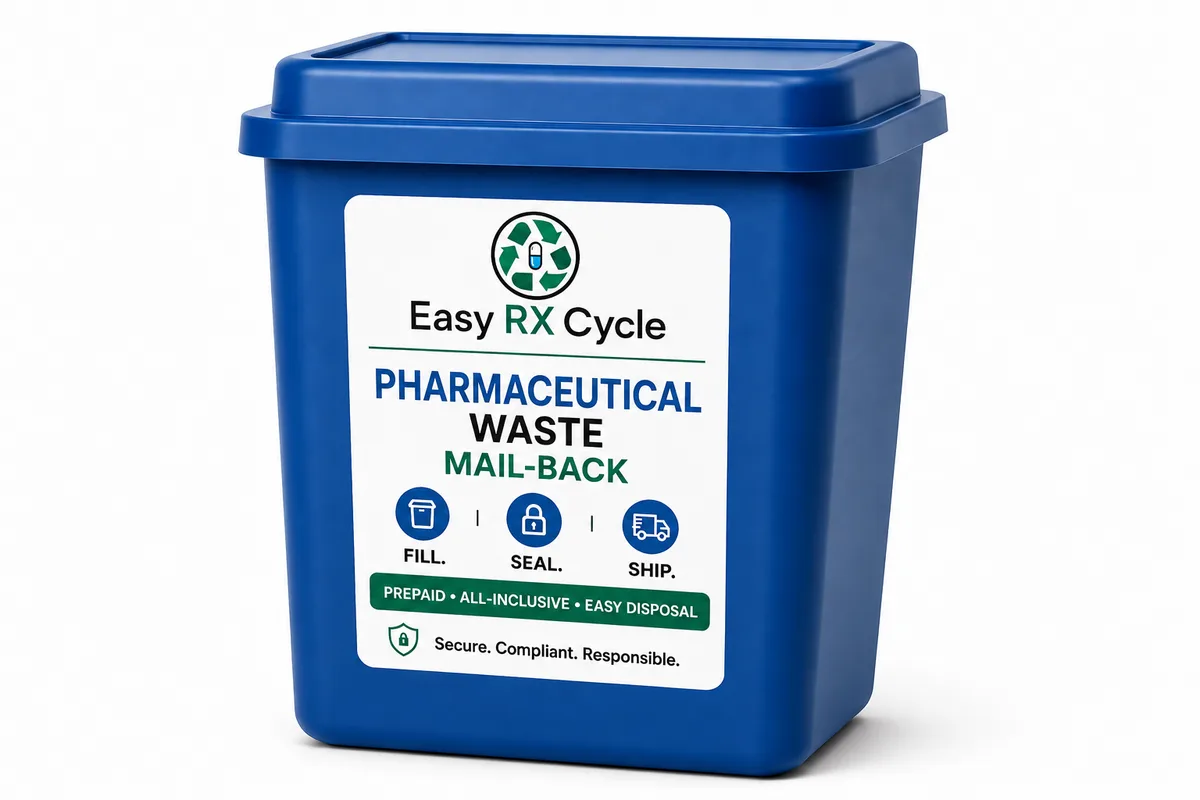
Returnable to credit. The rest, destroyed.
Every category of pharmaceutical return — sorted, credited, or destroyed and documented.
- Credit-eligible returns processed
- Non-returnable rendered non-retrievable
- Controlled substances (Schedules I–V)
- Non-controlled & expired Rx
- Manufacturer recalls & overstock
- DEA Form 222 & 41 handled
Credit first, destroy the rest.
How creditable stock is sorted from non-creditable, and how controlled and hazardous returns are handled compliantly.
Creditable manufacturer returns
In-date or within-return-window stock that the manufacturer will credit.
- Unopened, in-date returnable inventory
- Recalled product eligible for credit
- Overstock within the return window
- Expired-beyond-window stock
- Opened/partial containers (usually non-creditable)
- Patient-returned medication
Non-creditable destruction
Everything that can't be returned for credit still has to be destroyed compliantly.
- Expired non-returnable drugs
- Opened/partial stock
- Non-hazardous drug waste
- Creditable stock (return first)
- Undocumented controlled substances
Controlled & hazardous returns
The two categories that carry the most compliance risk in a return.
- Controlled substances via a DEA-registered reverse distributor
- RCRA-hazardous drugs to hazardous-waste destruction
- Controls handled without Form 222/41
- Hazardous drugs mixed into general returns
The Reverse Distribution Guide
Creditable returns vs. destruction, what qualifies for credit, DSCSA chain-of-custody, and how controlled and hazardous returns are handled — plus a checklist and FAQ.
Send it in. We sort, credit & destroy.
Submit inventory
Send your returns — or we set up a recurring pickup for high-volume sites.
We sort it
Credit-eligible vs. non-returnable, controlled vs. non-controlled — with full chain of custody.
Credit + destroy
Returnables processed for manufacturer credit; the rest destroyed non-retrievable. Form 222/41 handled.
Documentation
Certificate of Destruction + return documentation, archived and audit-ready.
DEA-registered
A registered reverse distributor — the credential that makes it legal to take back your controls.
Recover real credit
We maximize returnable value so you get money back on what would otherwise be a loss.
Audit-ready proof
Certificate of Destruction + return records for every batch, archived to your account.
Nationwide
Mail-in or scheduled pickup across all 50 states.
Built for pharmacies, hospitals & manufacturers.
Reverse distribution questions.
What is a reverse distributor?
A reverse distributor is a DEA-registered company that takes back expired, unused, and returnable pharmaceuticals from pharmacies, hospitals, and manufacturers — recovering manufacturer credit on what's returnable and compliantly destroying the rest, with full chain-of-custody documentation.
How does credit recovery work?
We sort your inventory into credit-eligible (returnable to the manufacturer or wholesaler for financial credit) and non-returnable. Returnable items are processed for credit; everything else is rendered non-retrievable, with a Certificate of Destruction to prove it.
Do you handle DEA Form 222 and Form 41?
Yes. We handle Form 222 for Schedule II transfers and prepare Form 41 for controlled substances surrendered for destruction — so the paperwork is done correctly and your records are audit-ready.
Can you process both controlled and non-controlled?
Yes — controlled substances (Schedules I–V) and non-controlled pharmaceuticals both route through reverse distribution, each handled to its own DEA and EPA requirements.
Who uses reverse distribution?
Retail, chain, 340B, specialty, and mail-order pharmacies; hospitals and health systems; long-term care; and pharmaceutical manufacturers managing returns and recalls.
Reverse distribution guides.
What is a reverse distributor?
The simple guide for pharmacies and facilities.
Recover credit on expired drugs
The return process and how the credit works.
Controlled-substance returns
Form 222/41, ARCOS, and DEA-registered handling.
How to use a reverse distributor
The five-step process, start to finish.
Comparing reverse distributors
What actually matters when you choose one.
Reverse distributor alternative
Returns + destruction + every stream, one vendor.
Reverse Distribution in all 50 states.
Mail-back to any U.S. address and scheduled pickup nationwide — pick your state:
Turn your returns into credit.
Get a same-day quote for reverse distribution — controlled and non-controlled, credit recovery included.